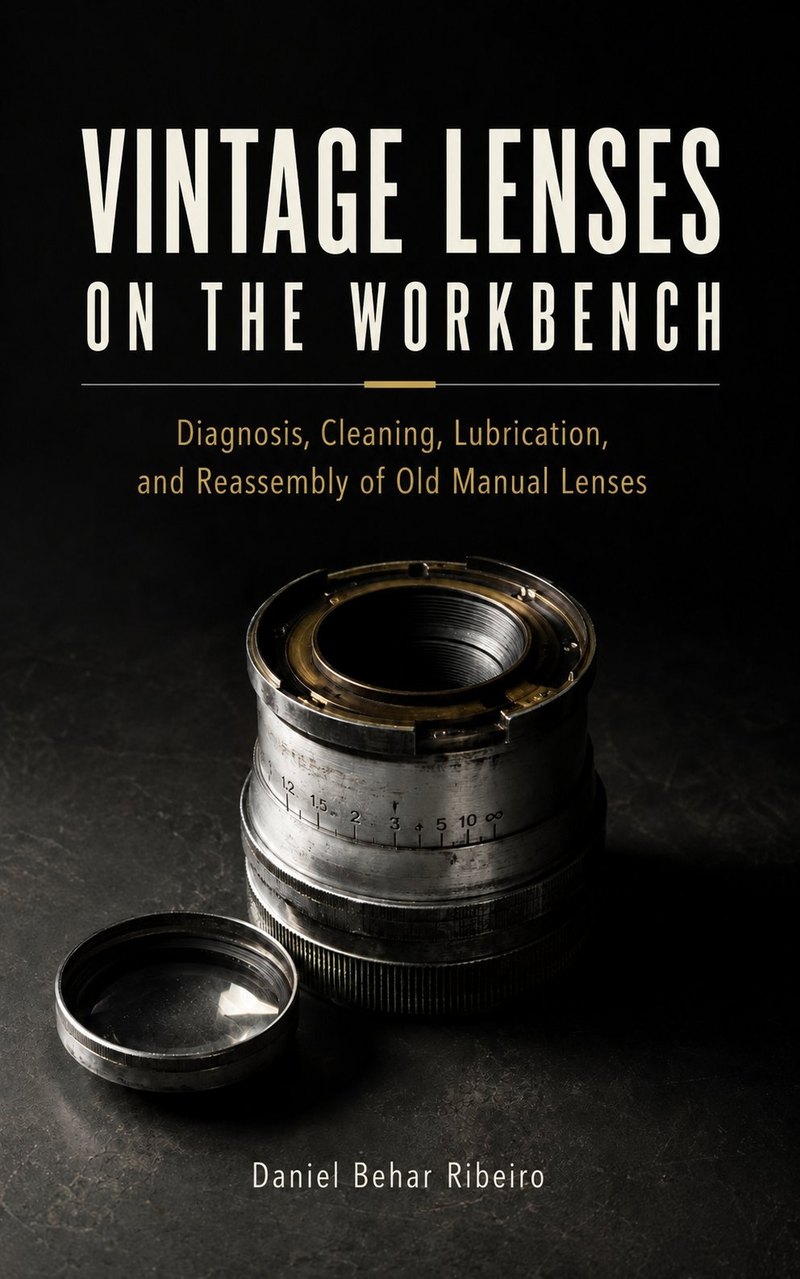
What this book is
The first gain is learning to look
Old lenses draw people in for different reasons — the visual character they give an image, the price, the curiosity of building a less predictable kit. The trouble starts when the lens leaves the listing and reaches your hands: fungus, haze, stiff focus, oil on the aperture blades, signs of earlier work, a bad adapter, and the questions the internet answers only in fragments.
The good information is scattered across service manuals, conservation texts, old forums, and shop accounts — and mixed in with a great deal of improvisation passing for method. This book was written to organize that field. Not a collection of tricks, not a romantic celebration of the vintage lens. Its aim is simpler: to teach you to read the object better before acting. When the diagnosis improves, so does everything after it — the choice of chemical agent, the decision whether to open, the use of the tool, and the reading of the result.